
The 4x8 Plot: The Seed Library
Dispatches from my garden

This year, I am growing a garden. My apartment complex sets aside a plot of land for residents and lets people sign up for a 4x8 piece of it to do what they will from May through October.
I like my apartment life that prompts me to go outside but I often miss growing things. When I divorced and moved here, I went from my half-acre yard to a series of houseplants who demand little from me but give little in exchange besides a little green on the windowsill. Often, I walk around the apartment grounds thinking about how I would plant it differently if it were mine. (The neat rows of peonies that die immediately have got to go!)
So when the sign-up sheet came around, I asked my boyfriend if he’d be willing to tend to the plot with me and he said yes and so here we are gardening. Like most things, it’s harder to garden alone than with someone else. I’m away for a residency for a large chunk of July. What would happen to the tomatoes without anyone else to water them?
For weeks, I thought about what we were going to plant. I even asked people for recommendations. I’ve never enjoyed food gardening in particular—all those seeds and starts—preferring to plant things like shrubs, trees, and perennials that will come back year after year. But it’s a seasonal plot or nothing.
So I kept it simple: a little corn, a few tomatoes and peppers, some beans. All varieties of things we’d be unlikely to find in the grocery store. A friend who gardens told me beans don’t like to be transplanted so I’d planned to buy seeds I could plant directly in the ground.
Gardens, as anyone knows, can quickly become an expensive way to grow “free” produce. (At least I’m used to this phenomenon from keeping chickens.) Since I wanted heirloom starts, I went to the nicer (read: pricey) nursery where I spent $25 on just a few plants. Then another $10 for compost to layer on top of the soil, hoping it would jumpstart the garden with some extra nutrients.
I thought I’d have to spend a bit more to get some seeds. Costs were adding up fast. But then I went to my local library where I spotted a seed library where anyone with a card could check out up to ten seed varieties, free of charge.
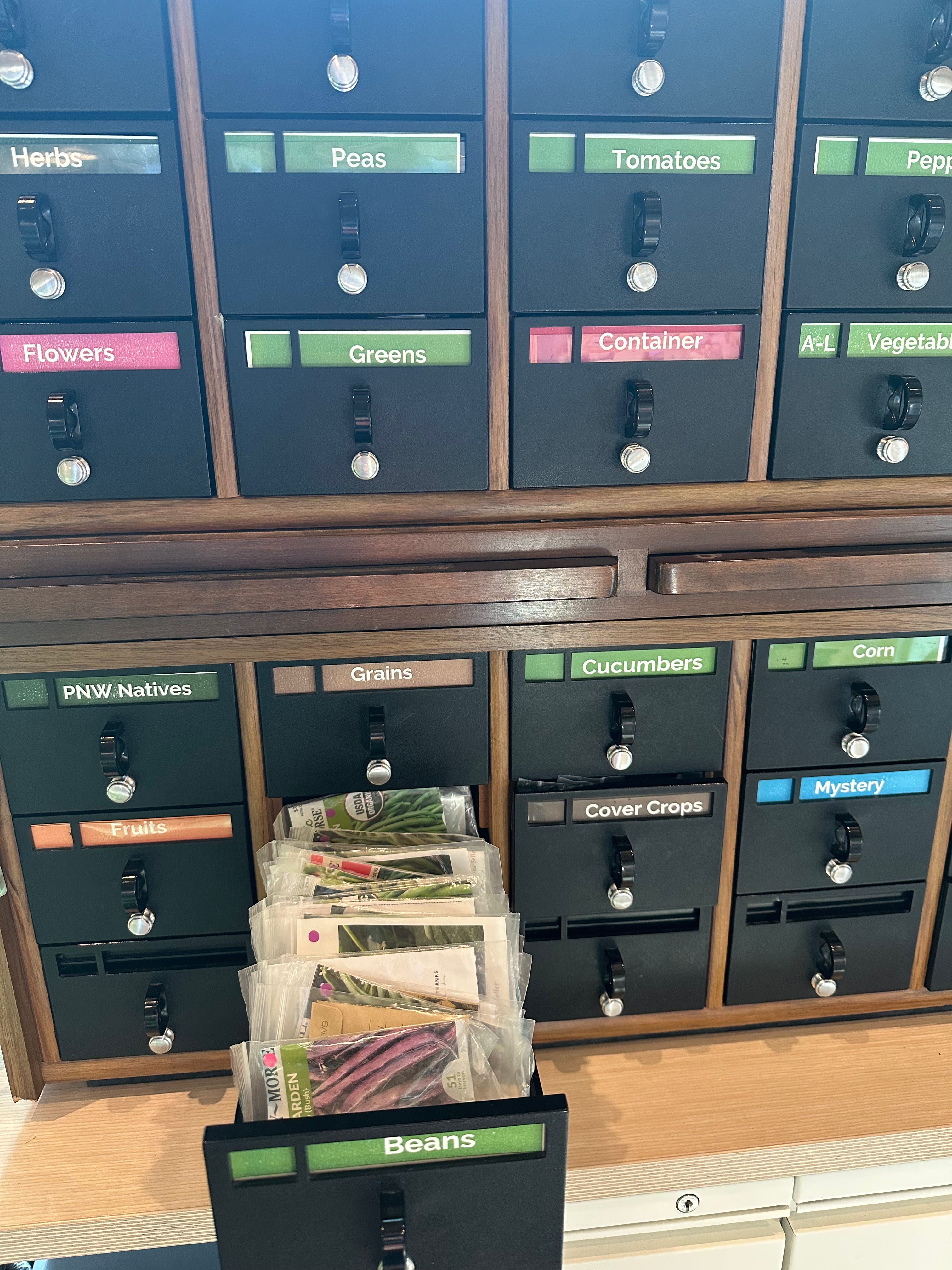
The seeds were organized by type: flowers in one drawer, natives in another, peas, greens, vegetables, and so on. I pulled each drawer open to look around and was delighted. In addition to commercial seed packets, some people had collected and donated seeds from their own gardens.
“Please take only what you need,” the library asked.
It reminded me of Robin Wall Kimmerer writing about how much people take when they pay for something versus when it’s a gift. “Gratitude creates a sense of abundance, the knowing that you have what you need. In that climate of sufficiency, our hunger for more abates and we take only what we need, in respect for the generosity of the giver,” she wrote.
Seeds are so small they can feel almost worthless. It would be easy to take more than I needed. In the past, I’ve let unused seeds I bought languish until they went bad. But at the seed library I was aware of how much time had gone into collecting each one of these seeds and the care the plants had been grown with. A local urban farm had harvested seeds from seven butterhead lettuce plants (they’d specified the number) to donate to the library last year. A woman in my city had saved seeds from her calendula flowers so she could give them away. How could I take that for granted?
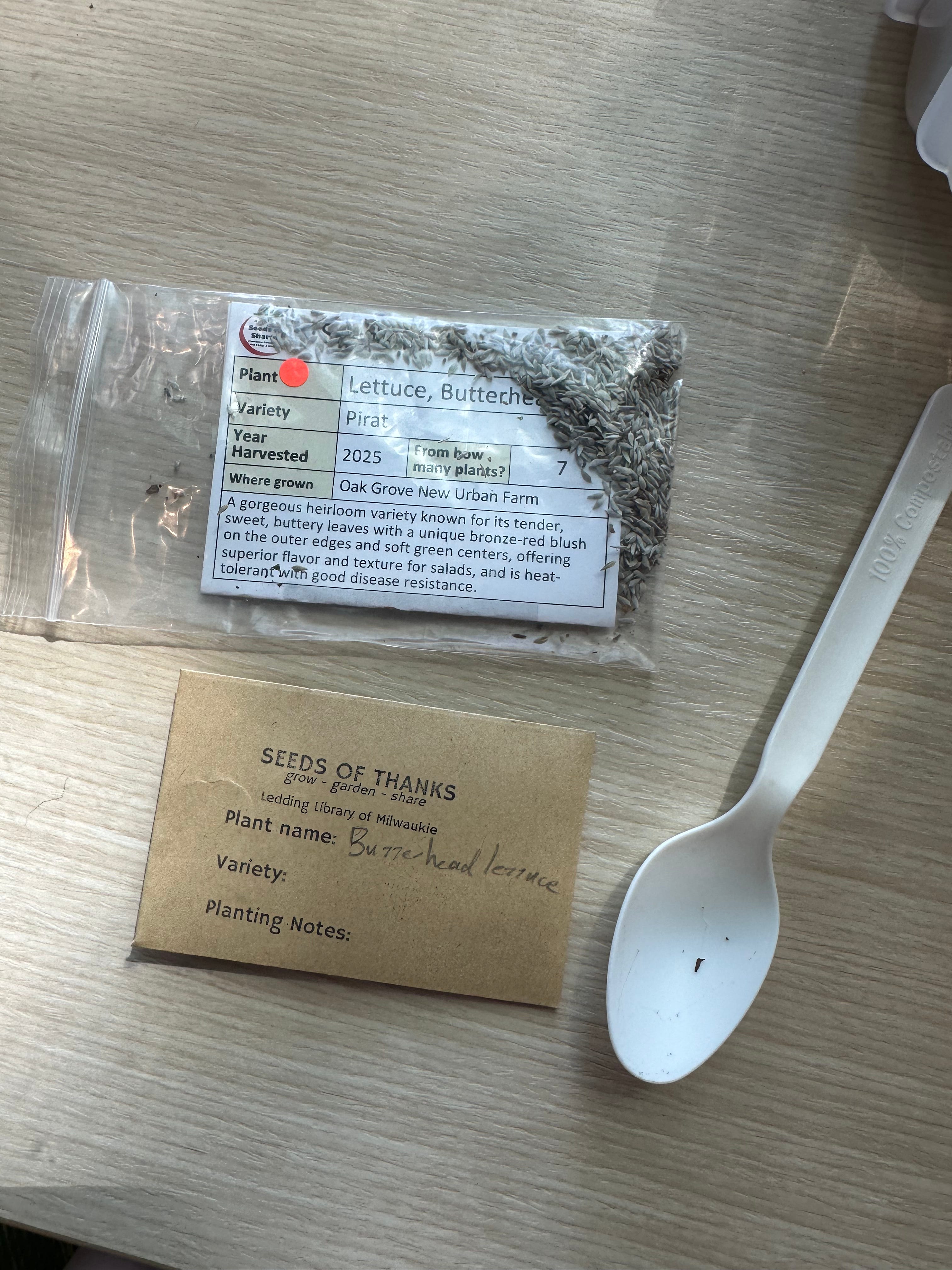
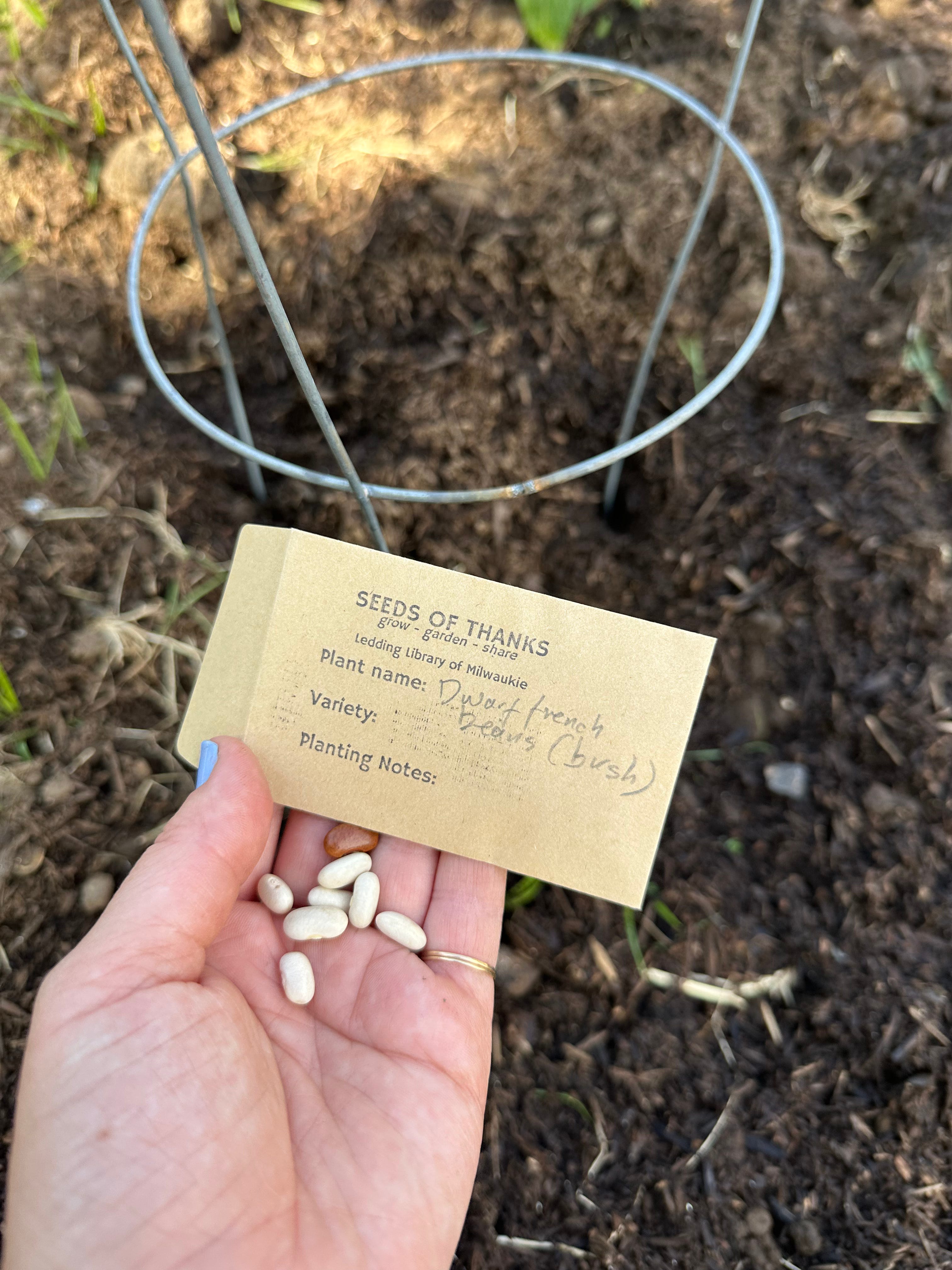
I carefully scooped just a few seeds into a paper packet I labeled with the seed type and planting instructions. Each seed, if all went well, would equal one plant. The garden was small. We didn’t need much. I decided on six varieties. I brought my beans and flower and lettuce seeds up to the front desk. I had to present my library card to check them out.
Later that day, garden plot ready, I pressed the seeds into the soil and watered them for a long time. The garden was full of other people chatting and tending to their own plots. Many people signed up for the same plot year after year. There were community tools, available to everyone, so people didn’t need to buy their own. One woman offered free tomato starts to someone in a nearby plot—she’d grown more than she needed. The gardens had just been planted but there was already a sense of abundance.
Maybe gardening didn’t have to be so expensive after all.
The 4X8 plot will be a running series throughout the growing season! Stay tuned for an essay on what happened when I found out just how many rabbits live right next to the garden…
Notes:
If you’re interested in seed saving after reading this week’s essay, I wrote a piece for Civil Eats some years back on the history of it and why it remains important for individuals and communities to save seeds! As someone at the Open Source Seed Initiative told me,
“People are starting to recognize the role seeds play in food sovereignty, but it’s been slower than the local food movement.” Having seeds adapted for a local environment is particularly important in an era of climate change. That doesn’t happen if one [laboratory] is breeding “carrots for the entire country”.
I just got back from a week in New York City where I managed to not read a single book! Not even on the plane! I did go to so many museums and walked over 20k steps on multiple days in a row. Now I’m home and resting. It’s important to recharge when you can. I’ll probably go out and read by the pool later today.
Luckily, you got a full TEN book recommendations last week. Check it out if you missed it.
Books I can't stop thinking about, vol. 2

Welcome back to another A Little Detour Reading List: Spring 2026 edition! I’m sharing the best books I’ve read this spring for those of you who don’t always scroll to the bottom of the newsletter for book recommendations.
Until next week,
What seeds are you saving and sharing?
-Tove
You can directly support my work by upgrading to a paid subscription to A Little Detour, sharing this post with someone who might enjoy it, or buying a copy of my book Under the Henfluence.
If you feel so inclined, you can also Venmo me a one-time cup of coffee.
If you really really love this newsletter but can’t afford to become a paid subscriber, send me an email to get a comped subscription.
Because all writers have a never-ending hope of finding ways to make writing financially sustainable, I’ve opened a Bookshop.org affiliate page. If you buy any of the books I mention in this newsletter, I will get a small commission and will use it to buy myself more books.
I could not love this more! There is a coffee shop in town that has a big table where community members bring the spoils of their garden and anyone can take as much as they need, from a single squash to a box of greens and reds. They ask that people be cognizant of leaving food available for those experienced food insecurity and it has been working out beautifully in that regard.
A seed library is such a wonderful idea! Imagine if this was in every library across the world.